Mold inspection and testing
Visual Mold Inspection in Long Island
Visible mold, water stains, or a musty odor inside a property indicate an underlying issue. A thorough mold inspection by a trained inspector helps you understand the extent of the problem and the next steps to take.
Service overview
What Does a Visual Mold Inspection Include?
Schedule a certified visual mold inspection in Long Island with Quest Mold and Asbestos Testing and receive a full report on your property’s mold risk condition.
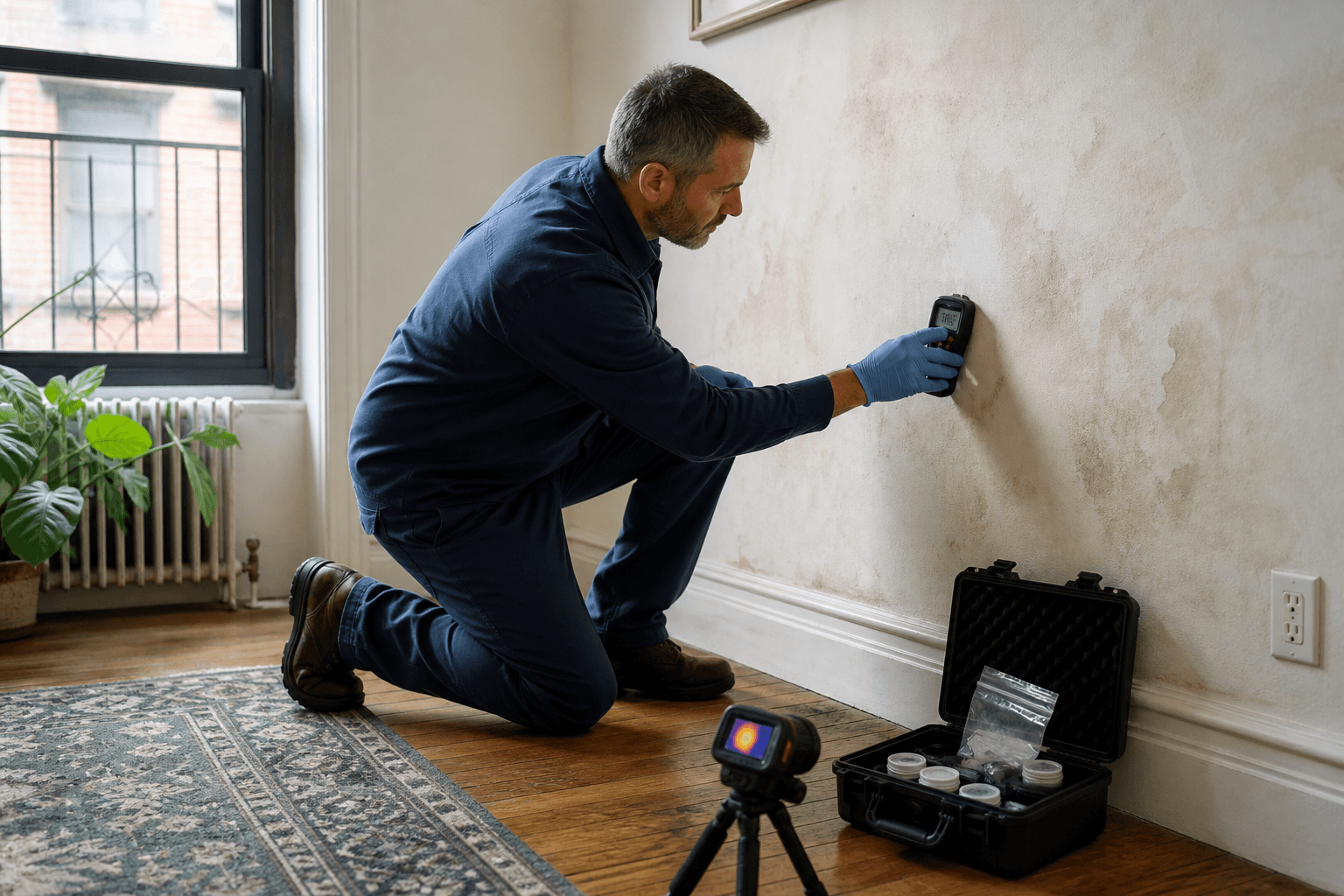
A visual mold inspection is a careful walk-through that does not damage anything, identifying mold growth and the moisture that causes it. An inspector uses moisture meters and thermal cameras to check drywall, baseboards, and floors. These tools help detect slow leaks, moisture buildup, and water movement that often go unnoticed.
The inspection closely examines pipe spaces, HVAC closets, window frames, and areas where temperature changes cause moisture buildup. The inspector traces water stains to their source, such as a damaged roof section, a foundation crack, or a hidden leak in a wall. Walls are opened only if there are clear signs of hidden mold.
Following IICRC S520 guidelines, the process measures the extent of mold growth and identifies active moisture sources.
Credentials behind the work
Certified inspectors. Recognized standards. Independent findings. MICRO
MICRO IICRC
IICRC CMI / CMRC
 EPA Lead-Safe
 NYS Department of Labor
When to Schedule a Visual Mold Inspection in Long Island?
Schedule a visual mold inspection to identify the water source, not just the stain. Call Quest Mold and Asbestos Testing.
Long Island’s weather, aging buildings, and storms create a higher mold risk than many property owners realize. These conditions require a professional inspection:
- Post-storm water intrusion can start mold in wall cavities within 48 hours.
- Properties pre-1980 with no vapor barriers installed.
- HVAC drain pan that has gone unserviced for over a year.
- Finished basement with recurring seasonal dampness.
- Occupants with persistent, unexplained respiratory symptoms.
- The roof was recently repaired, but the deck's condition has never been verified.
- Pipe leak behind a wall repaired without post-inspection.
- Buying or selling a property with an undisclosed water history.
Common Indoor Mold Types Found During an Inspection
See something that looks like mold, but you aren’t sure? Book a visual mold inspection in Long Island to get a clear answer on whether it needs repair.
Different types of mold grow under different moisture conditions, and the color and texture you see can give clues about what is behind the wall. Here are some common types:
Cladosporium
Dark specks on window sills and walls where condensation collects.
Aspergillus
Dusty-looking patches on drywall and insulation in high humidity.
Stachybotrys
Slimy black growth on wood or drywall that remained wet for weeks.
Penicillium
Rapidly spreading blue or green mold on soggy carpet and wallpaper.
Alternaria
Brown spots on shower grout and window tracks caused by outdoor air.
Chaetomium
White, cottony mass that darkens on framing lumber after a leak.
Fusarium
Pink or reddish patches on wet fabrics and on painted walls near leaks.
Trichoderma
Soft growth on damp wood and gypsum that can weaken the material.
Visual Mold Inspection Services for Long Island Properties
Residential Mold Inspection
A complete home check for visible mold on walls and in attics, basements, and crawl spaces to identify active and hidden mold and moisture damage.
Commercial Mold Inspection
A comprehensive mold visibility inspection of offices, stores, and other commercial spaces to identify active mold and air-quality issues.
Mold Damage Inspection
Mold risk assessment after water damage, showing how far active mold has spread beyond visible areas into walls and floors.
Ceiling & Wall Mold Inspection
Focused inspection for visible mold on ceilings and inside walls, where moisture and hidden mold grow behind finished surfaces.
Basement Visual Mold Inspection
Complete basement visual mold detection, covering foundation walls, floor joints, subfloor, and framing, to identify ongoing ground moisture and active mold.
Visual Mold Inspection vs Mold Testing
A visual inspection uses moisture meters and thermal cameras to detect mold growth, water stains, and moisture sources. It shows how far the problem has spread and why mold appeared. Mold testing collects samples such as air, surface swabs, or materials and sends them to a lab to identify mold types and amounts.
These steps answer different questions and usually work best when the inspection is done first.
A visual walkthrough provides quick answers about active leaks and building conditions. Lab results take longer and may not show where water entered. Usually, a thorough inspection resolves the problem without extra testing, especially when mold is limited and the moisture source is clear.
If hidden mold is suspected or a doctor needs detailed information, sampling helps, but the inspection still shows where to take samples.
Get a professional visual inspection to identify the water source and the extent of mold growth before spending money on mold testing in Long Island, NY.
Find the source, not just the stain. Book your visual mold inspection in Long Island, New York today.
Step-by-Step Visual Mold Inspection Process
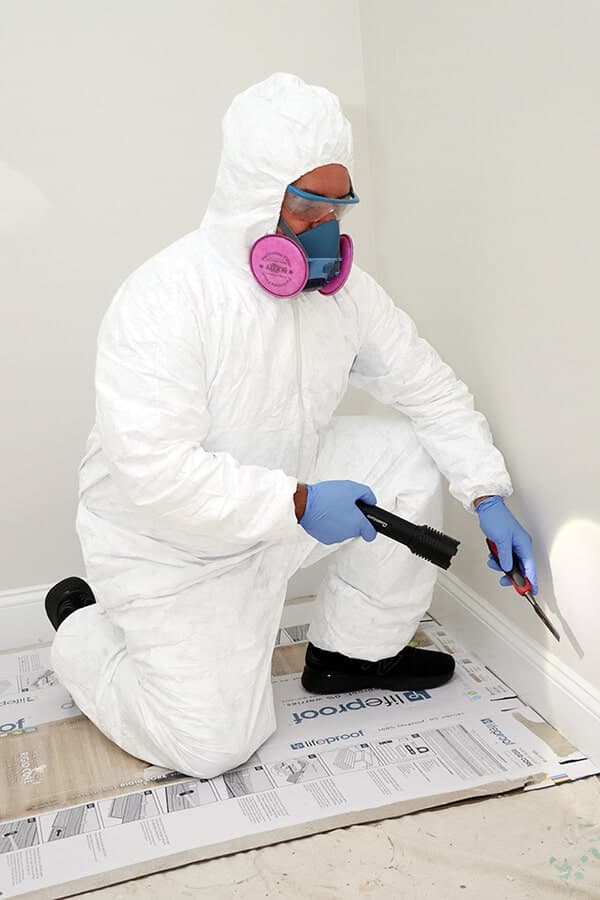
Our certified inspectors follow these steps to detect mold and determine the leak and moisture source:
Ask property owners about odors, leaks, and stains
Check rooms, basements, attics, and crawl spaces for signs of dampness and discoloration
Use a moisture meter to detect hidden water in walls, floors, and ceilings
Identify trapped moisture and condensation using thermal imaging
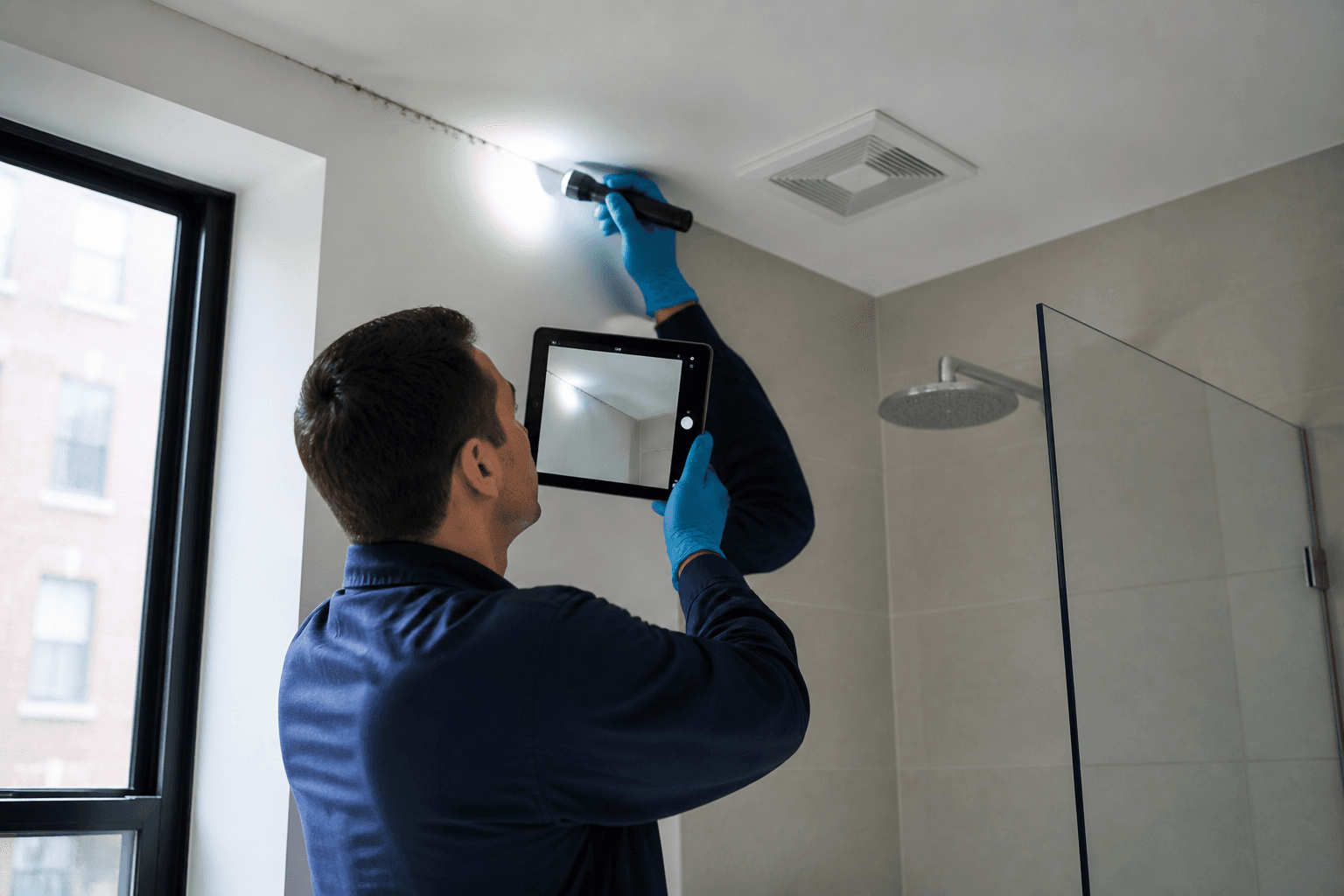
Inspect dark corners, ducts, and storage areas using a flashlight
Recommended next steps and response actions
Take photographs and document all findings
Trace water stains to roof, plumbing, or foundation leaks
Provide a report with findings, moisture readings, and next steps
Get a written report that explains every finding and provides you with a clear plan. Schedule your visual inspection for mold today.
Areas Examined During Mold Inspection for Visible Growth
Let our certified inspectors detect hidden dampness in areas you rarely check. Call us to schedule a full visible mold inspection and surface mold sampling in Long Island.
Moisture settles in predictable spots inside a building, and a trained inspector knows where to look first. Below are key areas checked during a visible mold identification:
- Bathroom shower surrounds and tub edges
- Under bathroom and kitchen sinks
- Around windows and exterior door frames
- Ceilings beneath bathrooms and roof edges
- Baseboards along exterior walls
- Basement cove joints and foundation walls
- Attic sheathing and rafter ends
- Crawl space joists and vapor barriers
- HVAC closets and condensate drain pans
- Behind furniture and stored boxes against the walls
How Mold Affects Indoor Air Quality?
Mold groups release tiny spores and gases, including microbial volatile organic compounds, into indoor air. These airborne particles cause the musty smell people often notice first and can trigger throat irritation, coughing, and sneezing before any mold stain appears on a wall.
Because spores are too small to see without a microscope, a room can have poor air quality even if surfaces look clean.
The link between mold growth and what you breathe is direct. A damp space feeds mold, which keeps sending spores into the air. The longer the moisture remains, the more spores fill the air. Carefully finding the damp spot is the only way to stop this, because cleaning surfaces alone does not prevent the mold colony from producing spores.
Find the moisture source filling your indoor air with musty spores and get a clear answer on what needs fixing. Call us today!
Why Trust Our Visual Mold Inspectors in Long Island?
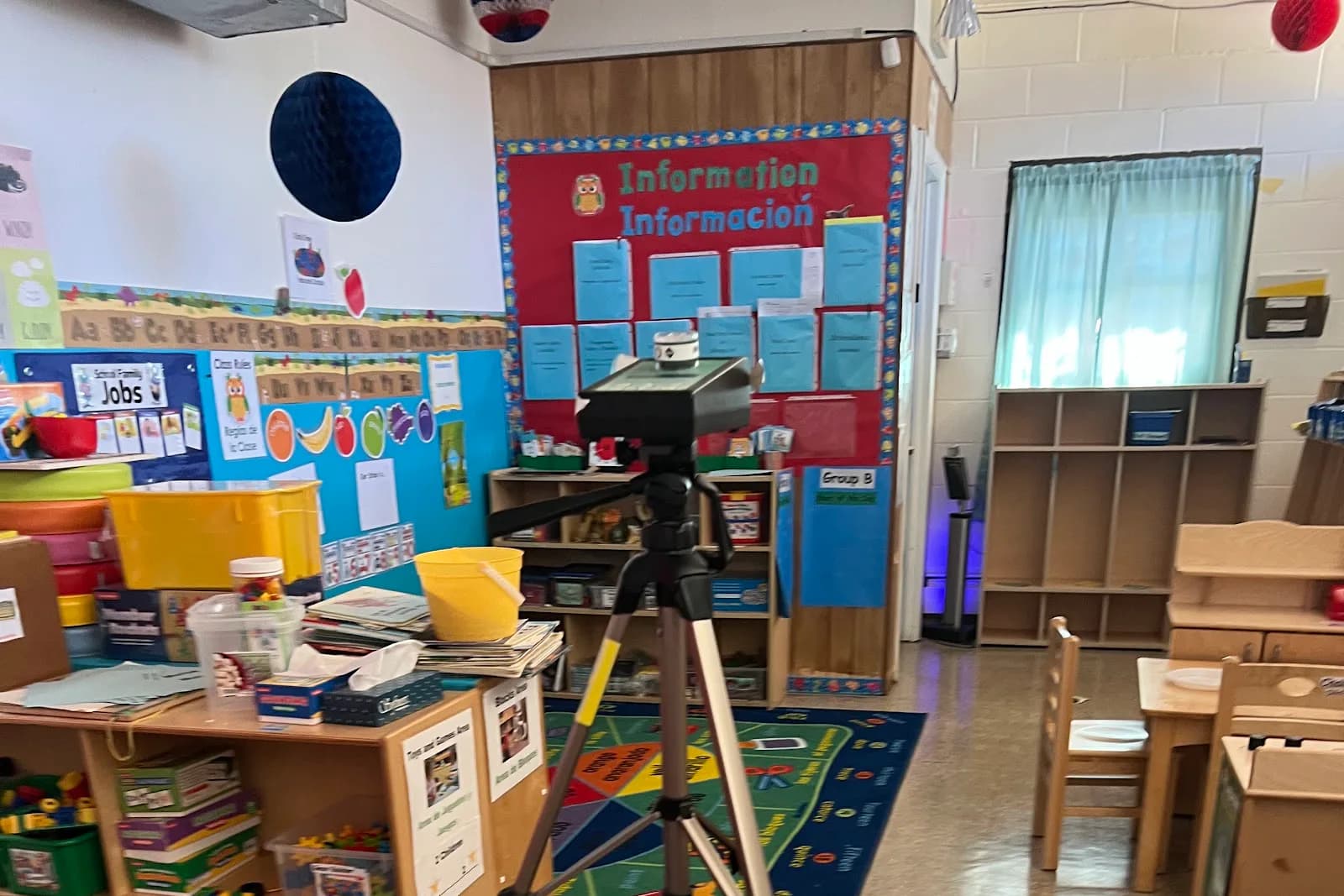
Book a visual mold inspection in Long Island that complies with IICRC S520 standards, so you know exactly what you are dealing with.
Real trust comes from an inspector’s training, not just a company name on a van. Here’s what sets Quest Mold and Asbestos Testing apart:
- IICRC Certified Firm
- EPA Lead-Safe Certified
- Certified Micro Mold Inspector
- New York State Licensed
- Fully Insured and Bonded
- Years of Local Experience
- Same-Day Written Reports
- Moisture Mapping With Thermal Imaging
- Inspection‑Only, No Remediation
“Meir was there right away to do my mold testing and he was honest and very helpful. I got my results within two days and he went over them with me on the phone.”

Before you schedule
Common questions, answered clearly.
What is a visual mold inspection?
A visual mold inspection is a non-invasive assessment where a certified inspector examines your property for visible mold, water stains, and moisture sources often using moisture meters and infrared cameras without collecting lab samples.
What's the difference between a visual mold inspection and mold testing?
A visual inspection identifies signs of mold and the conditions causing it, while mold testing collects air or surface samples for lab analysis to confirm the type and amount of mold; inspection comes first, testing follows if needed.
Do I need a visual mold inspection if I can already see mold?
Yes, even with visible mold, an inspection locates hidden growth, traces the moisture source feeding it, and defines the full extent of the problem so it isn’t just treated on the surface.
How long does a visual mold inspection take?
Most visual mold inspections take about 1 to 2 hours for an average home, though larger properties or homes with hard-to-reach attics, basements, and crawl spaces can take longer.
It typically includes a room-by-room visual check, moisture readings, and infrared scanning to find hidden dampness, followed by a written report detailing findings and recommended next steps.
Local field coverage
Serving New York City and Long Island.
Send Quest the property address when scheduling and the team will confirm availability and the right testing scope.
A clear next step
Start with the property concern.
Tell Quest what you are seeing, smelling, renovating or trying to verify. The team will confirm the appropriate inspection or testing approach before the appointment.
Call 917-277-7580