Mold assessment / before remediation
Define the Mold Scope Before Removal
Independent mold assessment and testing document moisture conditions, affected areas and the appropriate remediation scope before mold removal begins.
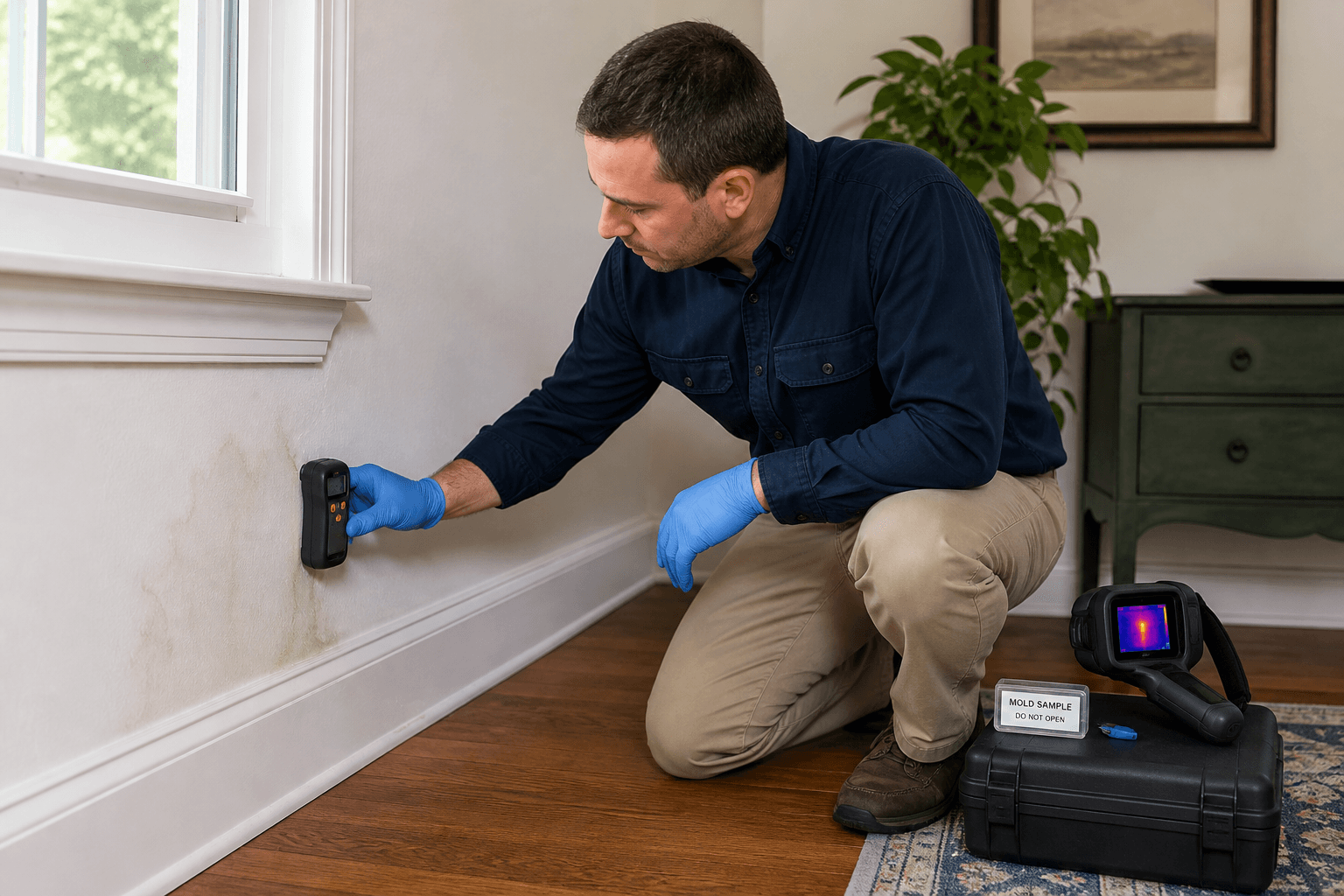
Two different questions
A remediation quote prices cleanup. Assessment defines what the property needs.
Moisture conditions, affected areas and evidence.
An independent mold assessment documents the moisture conditions, affected materials and evidence needed to define a focused remediation scope. A removal estimate can price cleanup, but it should not be the document that decides how much work the property needs.
A written mold remediation scope.
A licensed mold remediator can plan containment, material removal and cleaning after an independent assessor defines the affected area and required work.
When to stop and define the condition
Pause before cleanup when the condition is still undefined.
The purpose of assessment is not to make every project larger. It is to identify the moisture problem, the affected area and the evidence needed to keep the response proportionate.
Growth follows a leak
Visible growth or staining appeared after a plumbing failure, roof leak, flood or repeated condensation.
The source is uncertain
An odor or recurring symptom of dampness remains even though the obvious surface has been cleaned.
The boundary is unclear
More than one room, wall assembly or material may be involved and the removal estimate relies on assumptions.
Work already happened
Cleanup is complete and the owner, occupant or contractor needs independent post-remediation documentation.
The evidence sequence
Move from a mold concern to a verified result.
Quest performs mold assessment and testing only. Because we do not sell remediation, the findings can follow the property evidence rather than a financial interest in expanding the cleanup.
Assess
Document moisture, visible conditions and the history behind the concern.
The assessment starts with the property: water events, odors, visible growth and the materials that may be affected. That context determines where closer investigation is useful.
What defines the scope
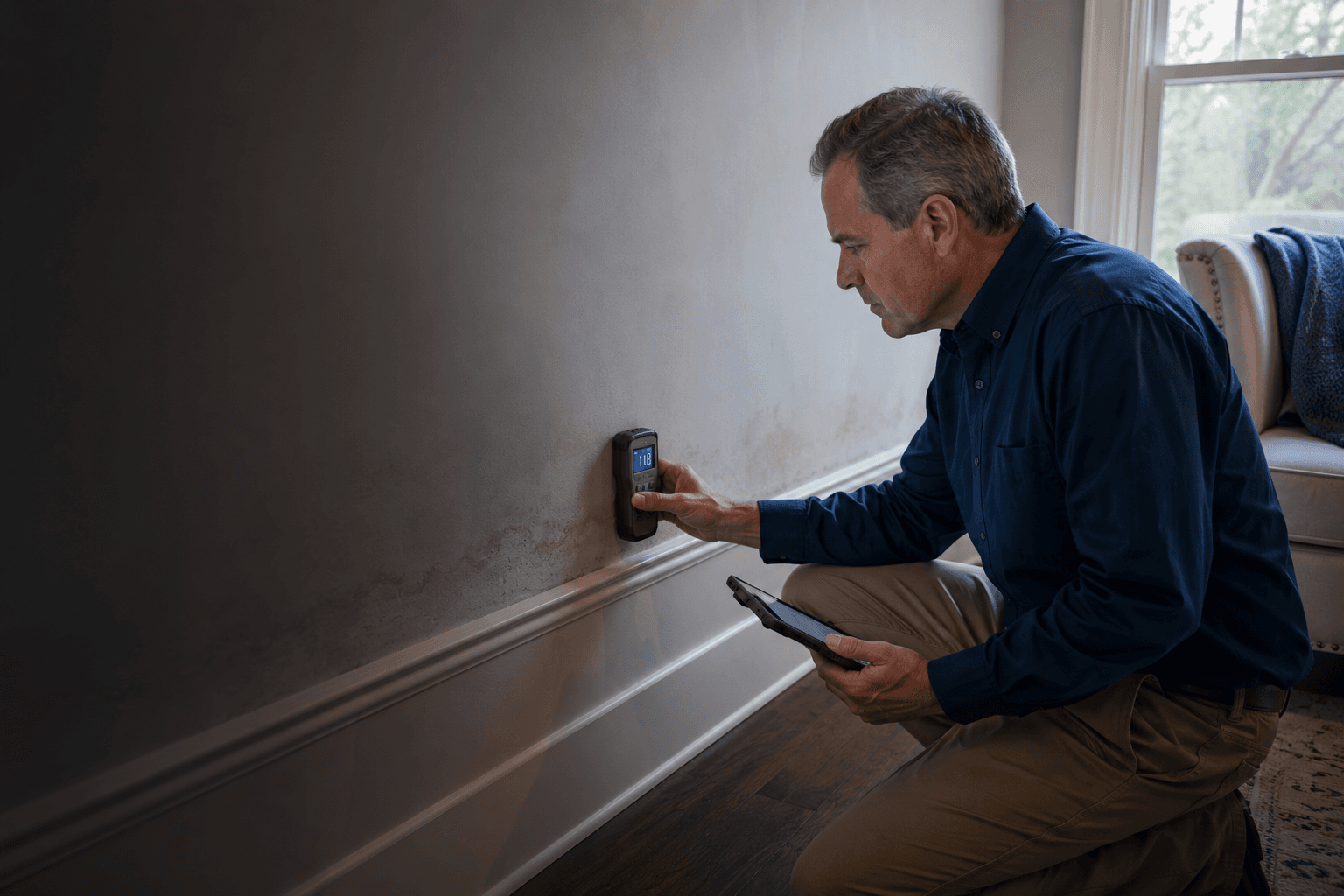
A useful mold scope connects moisture, materials and verification.
The report should give the remediator a clear starting point and give the property owner a way to evaluate the completed work.
- Source
- Observed moisture conditions and the history of the water event
- Boundary
- Rooms, surfaces and materials included in the affected area
- Evidence
- Field observations, instrument readings and appropriate sampling results
- Closeout
- The conditions and verification steps expected after remediation
Independent handoff
One mold file. Separate responsibilities.
Quest assesses the property, documents moisture and affected materials, and defines the mold remediation scope
A licensed mold remediation company performs the work described in the independent assessment
Quest returns for an independent post-remediation assessment and appropriate clearance testing
Before work begins
What property owners ask before mold removal.
Does Quest perform mold removal?
No. Quest provides independent mold assessment and testing. A separate licensed remediation company performs any cleanup defined by the assessment.
Does every mold concern require laboratory testing?
Not automatically. The assessment begins with the property conditions and the question that needs to be answered. Sampling is used when it can clarify the condition, support the scope or verify the result.
Why separate assessment from remediation?
The assessor defines and later evaluates the work without earning revenue from the cleanup itself. That separation keeps the scope tied to documented conditions.
What happens after remediation?
Quest can return for a post-remediation assessment. The visit reviews the completed area against the defined scope and may include appropriate clearance sampling.